
Shiba inu coin holds a strange position in crypto: a self-described dogecoin killer that became a top-ten asset for a moment in 2021, then spent the years since building an ecosystem while its price behaved exactly like the memecoin it started as. Both halves of that sentence matter. This guide covers where SHIB came from, what the famous burn really did, whether the ecosystem changes the math, and the tax detail most meme traders skip until it hurts.
What shiba inu coin is
SHIB launched on Ethereum in August 2020, created by a pseudonymous founder known as Ryoshi, with a supply of one quadrillion tokens. Half went into a Uniswap liquidity pool with the keys thrown away. The other half was sent, unasked, to Ethereum co-founder Vitalik Buterin as a decentralization gesture. In 2021 Buterin answered it: he donated around 50 trillion SHIB, worth about a billion dollars at the time, to an Indian Covid relief fund and burned roughly 410 trillion, about 40 percent of the entire supply, in one transaction.
That burn, the celebrity attention around it, and the 2021 mania carried shiba inu coin to its record of $0.00008616 on 28 October 2021, when it briefly passed dogecoin as the most valuable memecoin. It has traded as much as 95 percent below that level in the years since. Around 585 trillion SHIB circulate today.
The ecosystem experiment
Unlike most memecoins, SHIB kept building. ShibaSwap runs as the ecosystem’s exchange, BONE and LEASH exist as companion tokens, and Shibarium, a layer 2 network launched in 2023, routes 70 percent of its base fees into automated SHIB burns. Volunteer developers coordinate an ongoing roadmap. Whatever else it is, this is more infrastructure than a joke asset needs.
The honest question is whether any of it moves the token, and so far the answer is mostly no. Burns since the Vitalik event have removed only a sliver of supply, because Shibarium’s activity is small next to a base of hundreds of trillions of tokens. The price still trades on meme sentiment, bitcoin’s direction, and exchange flows rather than on ecosystem metrics. The infrastructure is real. The market largely prices the meme.
The one cent question
The most searched shiba inu coin fantasy deserves plain arithmetic. At roughly 585 trillion circulating tokens, a price of one cent implies a market value near 5.9 trillion dollars, larger than any company on earth has ever been worth, attached to an asset with no revenue. Getting there through burns would mean destroying most of the remaining supply, and at observed burn rates that project is measured in centuries, not market cycles. None of this prevents strong percentage rallies from a low base. It does mean that price targets borrowed from stocks, one cent or one dollar, are category errors.
Risk in plain terms
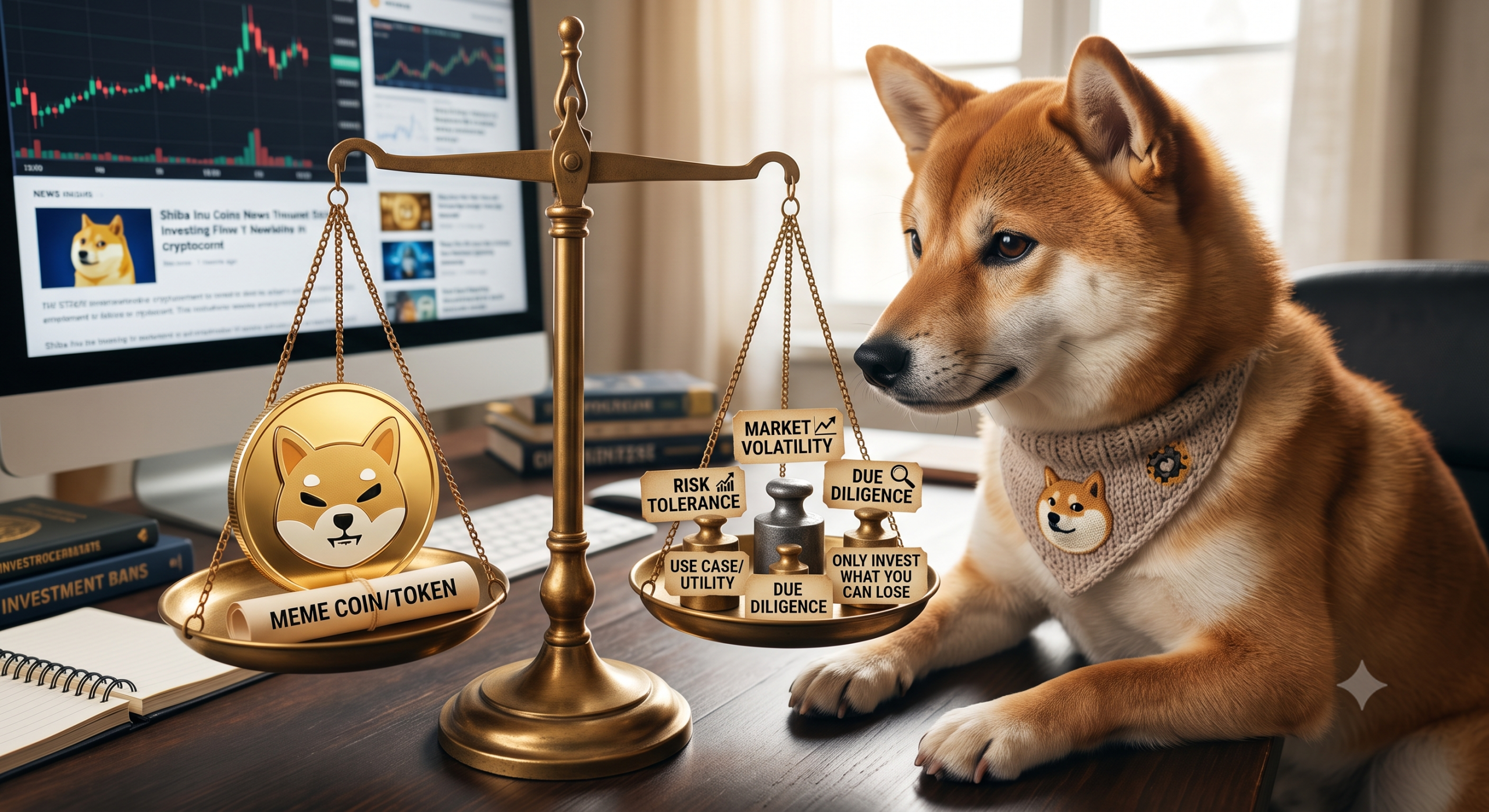
FINRA’s investor page on crypto asset risks applies with extra force to shiba inu coin: volatility high enough that losing the entire position is a realistic outcome, thinner liquidity than traditional assets, and none of the protections that come with registered securities. Add the SHIB specifics: a 95 percent drawdown is not a hypothetical but the recent record, exchange wallets and large holders dominate the ledger, and attention, the only fuel, cannot be scheduled. Derivatives listings add margin trading on top, which amplifies all of it. Whale alerts and burn dashboards are entertainment, not risk management. Position size is the only lever that reliably works.
Taxes: the part meme traders skip
Every disposal of SHIB is a taxable event for a US taxpayer, and disposal is wider than selling for dollars. Swapping shiba inu coin for ETH is a disposal. Spending it is a disposal. The IRS’s digital asset FAQ is explicit that gains and losses must be reported even when no broker form arrives. The same width works in reverse: bags sitting deep underwater can be sold to harvest losses against other gains, which is often the most productive thing an old SHIB position ever does.
The bookkeeping across wallets and swaps is the tedious part, and it is what investor tax software such as TurboTax is built to absorb: imported transactions, gain and loss calculations across lots, and the forms that make April shorter. Records kept from the first buy cost minutes. Records reconstructed three years later cost a weekend and some guesswork.
Before buying: a short checklist
- Size the position as entertainment money; the record drawdown is 95 percent.
- Verify the contract address, since SHIB copycats exist on several chains.
- Ignore one cent and one dollar targets; the supply math forbids them.
- Treat burns and ecosystem news as narrative until usage data says otherwise.
- Log every buy, swap, and sale from day one for tax season.
- Review the position yearly; even a losing bag can be harvested.
Shiba inu coin FAQ
What was the highest shiba inu coin price?
The record is $0.00008616, set on 28 October 2021 at the height of the memecoin mania, when SHIB briefly overtook dogecoin by market value. The token has spent most of the time since trading between 80 and 95 percent below that peak.
Can shiba inu coin reach 1 cent?
Not through any realistic path. One cent across roughly 585 trillion circulating tokens implies a market value near 5.9 trillion dollars, beyond anything a single asset has ever reached, and burns shrink supply far too slowly to change the equation. Percentage rallies happen. That target does not.
Is shiba inu coin a better buy than other memecoins?
It is a different bet. SHIB carries an ecosystem and a large standing community, which adds staying power but has not changed how the price behaves. Purer attention plays move harder in both directions; the guide to pepe coin covers that end of the spectrum. Neither variety suits money that needs to survive.