
NFT marketing in 2026 has almost nothing in common with the playbook that worked in 2021. Trading volumes are a fraction of what they were, the flip-for-profit buyer is mostly gone, and the projects still standing sell products: game assets, memberships, tickets, collectibles with licensing behind them. Marketing has to follow that shift. This guide covers the channels that still produce, the legal lines that trip campaigns, and the point at which outside help earns its fee.
What NFT marketing means now
The 2021 version of NFT marketing was demand generation for speculation: hype a mint, sell out in minutes, let the floor price do the retention work. That loop is dead, and campaigns built on it now read as a warning sign to the exact buyers who remain.
What remains is closer to ordinary product marketing with an onchain wrapper. Gaming studios market NFTs as items players can use and trade. Brands run them as membership passes and loyalty layers. Artists sell editions to collectors who follow the work, not the chart. The audience is smaller, warier, and better informed, which changes the job: the pitch is what the thing does and what the buyer receives, not what it might be worth next month.
The channels that still pull weight
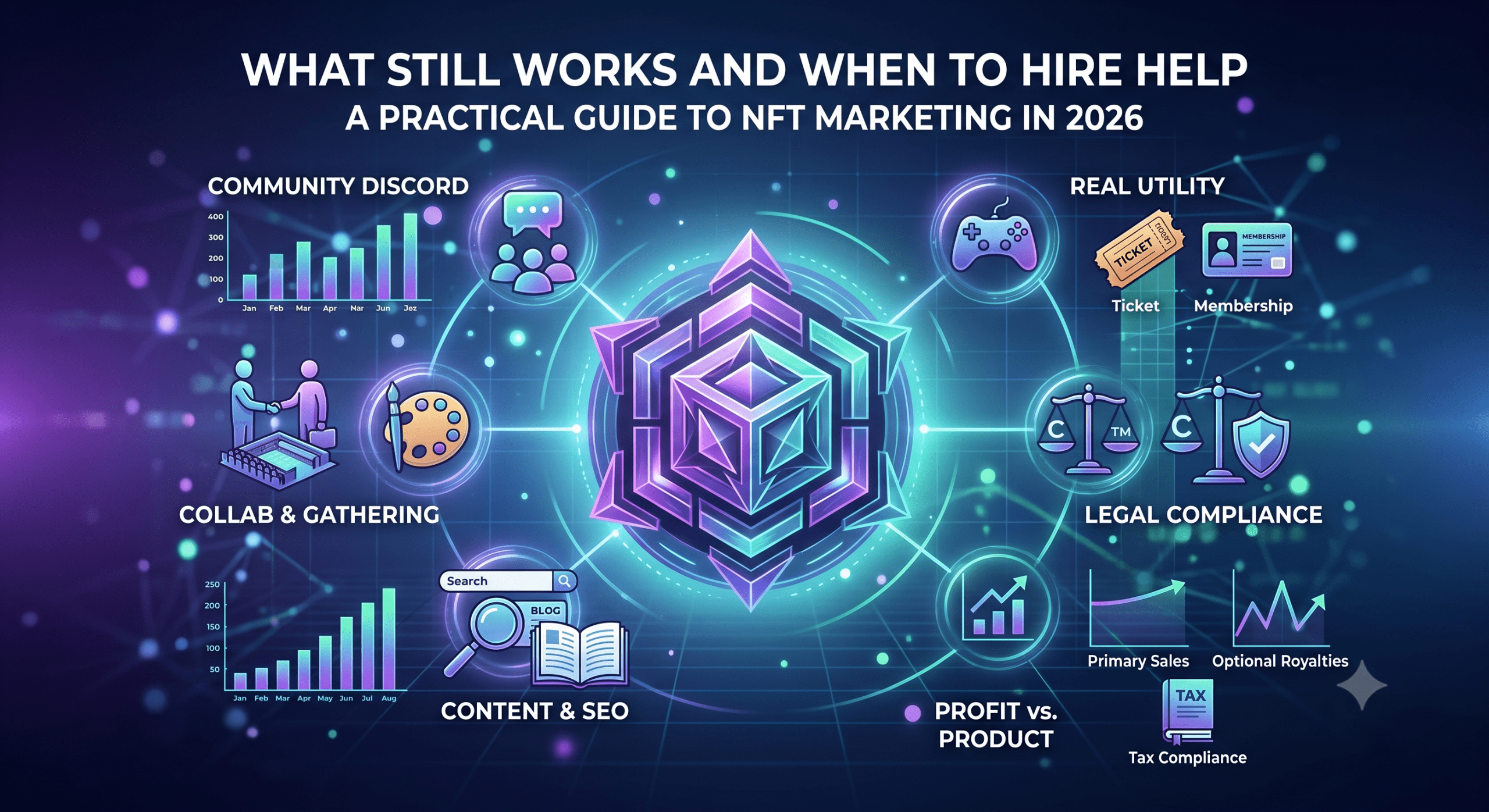
Community remains first among channels, but quality now beats size everywhere it used to be the reverse. A Discord of two thousand people who show up is worth more than fifty thousand airdrop farmers, and moderation, events, and holder-only utility are what keep it alive. Collaborations do the discovery work: allowlist swaps with adjacent communities, artist collabs, and game integrations put a project in front of people who already hold wallets.
Content and search matter more to NFT marketing than they did during the boom, precisely because attention is scarcer. Evergreen guides, honest documentation, and founder writing outlast a hype cycle and keep pulling search traffic between announcements. Events and physical presence came back too: conferences, gallery shows, and meetups convert at a rate no impression metric captures, because the remaining buyer base overlaps heavily with people who go to things. Paid ads sit last; platform rules still constrain crypto products, and the buyers who convert are rarely reachable through cold display anyway.
The legal lines campaigns keep tripping
Two areas produce most of the damage. The first is rights confusion. The USPTO and Copyright Office’s joint study of NFTs found widespread confusion about which intellectual property rights transfer with a token, and campaigns that stay vague about it invite disputes, refunds, and worse. Good NFT marketing states plainly what the buyer gets: a license, defined usage rights, or just the token itself, in words a non-lawyer can read.
The second is financial promises. NFT marketing that leans on expected price appreciation drifts toward securities territory, and enough projects have ended badly there that the pattern is well documented. Paid promoters need disclosure in NFTs like everywhere else in crypto. Selling membership, art, or utility is durable ground. Selling number-go-up is not.
The money side: royalties, income, and records
Creator economics changed mid-decade when major marketplaces made royalties optional, so treat primary sales and direct community revenue as the dependable income and royalties as a bonus. That income is taxable wherever the creator sits. In the United States, the IRS treats digital assets including NFTs as property, and sales, royalties, and payments received in crypto are reportable income, with broker reporting on the new 1099-DA form phasing in. Teams elsewhere face the same pattern under their own rules; the constant is that marketplaces will not do the recordkeeping for anyone.
And the bookkeeping is genuinely messy: revenue arrives across marketplaces, chains, and currencies, with gas fees and platform cuts scattered through it. Teams that run it like a business from day one, invoicing collabs and tracking expenses in accounting software such as FreshBooks, spend launch week marketing instead of reconstructing spreadsheets for an accountant in April.
When to hire an NFT marketing agency
An independent artist dropping editions does not need an agency; a founder with a live Discord and consistent output outperforms most retainers at that scale. Hiring starts to make sense with a launch window that cannot slip, a gaming or brand campaign that needs many channels at once, or an existing community that needs scaling past what the team can staff.
Vet the vendor on post-boom work. Case studies from 2021 prove nothing about 2026; ask what they shipped in the past year and which of the communities they built still exist. Follower counts can be rented, so look at engagement quality and holder retention instead. And treat any promise about floor prices the way this site treats guaranteed rankings: as the red flag that ends the call. The vetting checklist in the web3 marketing agency guide applies almost unchanged.
Before spending on an NFT campaign
- Write down what the buyer receives, in one sentence a non-lawyer understands.
- Put rights and license terms on the project page, not just in a contract PDF.
- Budget community and content first, paid reach last.
- Set written disclosure rules for every paid promoter.
- Track every sale, royalty, and fee from day one.
- Refuse any vendor who guarantees floor prices or sellouts.
NFT marketing FAQ
Is NFT marketing still worth doing?
For products, yes. Game items, memberships, ticketing, and collectible editions with real licensing continue to sell to smaller, more deliberate audiences. For pure speculation plays, no: the buyer that playbook targeted has mostly left the market, and the regulatory patience for price-hype campaigns left with them.
How much does NFT marketing cost?
A capable community manager is the first real cost, followed by collab and content budgets. Agency retainers for NFT work commonly run from a few thousand dollars monthly upward depending on scope. Spending scales with ambition, but the sensible floor is lower than in 2021, because paid hype no longer converts and no longer deserves budget.
Do NFT projects need a marketing agency?
Most do not at the start. Founder-led community building outperforms outsourced enthusiasm in the early months. An agency earns its fee when there is a hard launch date, a multi-channel brand or gaming campaign, or a real community that needs professional scaling. Hire against a defined job, not against anxiety.